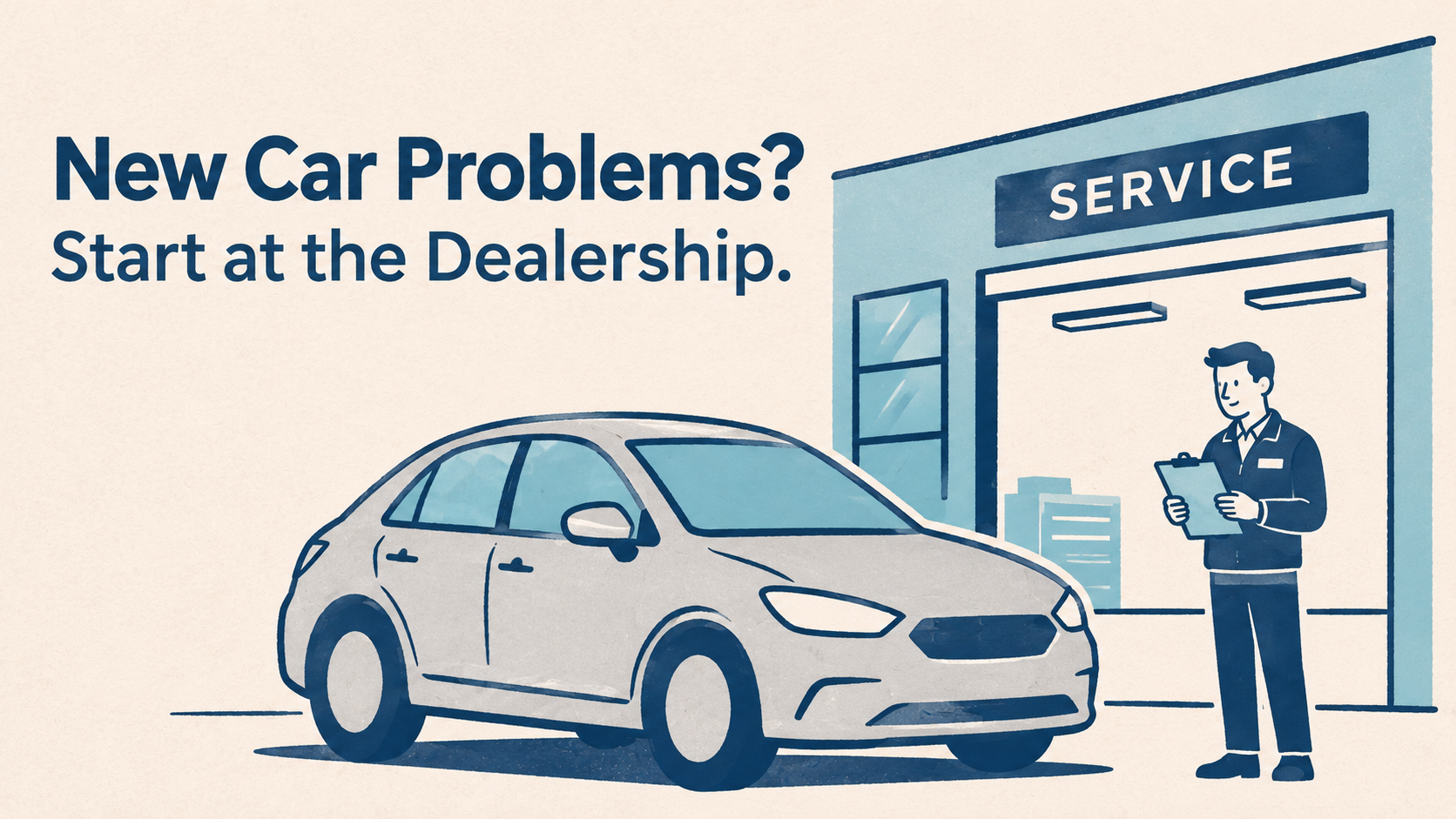
If you are searching for “where to take my car for repairs” because your new vehicle is having problems, start with an authorized dealership service department or manufacturer-authorized service center. For suspected factory defects or warranty issues, we recommend having the authorized facility inspect the vehicle before allowing an outside body shop or local mechanic to attempt repairs.

A recurring warning light, unexplained noise, transmission hesitation, or electrical malfunction should be reported through the manufacturer’s authorized repair network. This gives the manufacturer an opportunity to address the problem and helps document the vehicle’s condition and repair history.
Outside repair attempts can complicate a potential California lemon law claim—especially if the manufacturer argues that another shop caused or worsened the problem. Starting with the authorized dealership helps avoid introducing that additional dispute before the manufacturer has evaluated your complaint.
Where to Take My Car for Repairs When My New Car Has Problems
For a suspected problem covered by your manufacturer’s warranty, contact the authorized dealership first.
Tell the service department what you are experiencing and request an appointment to evaluate the concern under the applicable warranty. Confirm that the facility is authorized to handle your vehicle and the type of repair involved.
Concerns to report include:
- A check engine light or warning message that repeatedly returns.
- Stalling, loss of power, or difficulty starting.
- Transmission hesitation, jerking, or harsh shifting.
- Recurring battery or charging problems.
- Electrical systems that malfunction.
- Air conditioning that repeatedly stops working.
- Unexplained noises, vibrations, or fluid leaks.
- Steering, braking, or suspension concerns.
These symptoms do not automatically establish a manufacturing defect or lemon law claim. However, they deserve an appropriate inspection.
Avoid arranging independent repair attempts for the suspected defect before the authorized service department has evaluated it. Manufacturers may require designated facilities for repairs they provide free under the warranty.
Why the Authorized Dealership Should Inspect the Problem First
Taking your vehicle to the authorized dealership serves two important purposes: it gives the manufacturer an opportunity to address the complaint, and it creates a record of that opportunity.
The repair documents can help establish:
- What symptoms you reported.
- When the problem was presented for repair.
- The vehicle’s mileage at that time.
- What the service department found.
- What repairs or updates were performed.
- Whether the symptoms continued afterward.
This history matters when a problem keeps returning.
For example, a new vehicle may display the same warning light several times over a few months. If each visit accurately documents the complaint and the attempted repair, the records help explain how the condition developed and how the manufacturer responded.
A conversation with a service advisor is useful, but written records are easier to review later. Ask for documentation rather than relying solely on verbal assurances that the vehicle is fine.
How Outside Body-Shop Repairs Can Complicate a Lemon Law Claim
Before allowing an outside body shop or mechanic to attempt repairs for a suspected factory defect, bring the vehicle to the manufacturer’s authorized repair facility.
Outside work can create a dispute over whether the problem came from the vehicle’s original condition or from the later repair work.
If an independent shop worked on the same components involved in your complaint, the manufacturer may argue that the shop caused or worsened the condition. Resolving that argument may require additional records, technical analysis, or expert evaluation.
Consider this hypothetical example:
A new vehicle develops an electrical malfunction. Before visiting the dealership, the owner asks an independent shop to fix it. The shop changes wiring connections, but the malfunction continues. When the owner later presents the vehicle to the dealership, a dispute arises over whether the continuing problem comes from the original defect, the wiring changes, or both.
The original complaint may have been legitimate. Nevertheless, the outside work introduces another possible explanation that must be addressed.
This is why we recommend starting with the authorized dealership rather than having an outside shop attempt to fix a suspected warranty defect.
Why Dealership Repair Opportunities Matter for California Lemon Law
California’s lemon law generally addresses qualifying warranty defects that the manufacturer cannot repair after a reasonable number of opportunities.
For a new-vehicle repurchase claim, the problem generally must be covered by the applicable manufacturer’s warranty and substantially impair the vehicle’s use, value, or safety, along with satisfying other legal requirements.
An important distinction is whether the manufacturer or its authorized representative received an opportunity to address the condition.
An independent shop’s invoice may help show that a problem existed. It does not necessarily establish a repair opportunity for the manufacturer.
For example, two visits to an unaffiliated mechanic should not automatically be counted as two manufacturer repair attempts. Authorization, manufacturer involvement, and the circumstances of the visits matter.
Presenting the concern through the authorized service network helps establish the manufacturer’s involvement from the beginning.
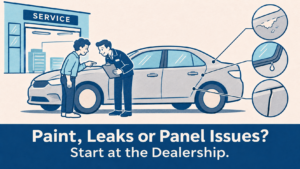
What About Paint Defects, Water Leaks, or Body-Panel Problems?
Start with the authorized dealership even when the suspected factory defect involves the vehicle’s body.
A concern involving peeling paint, unexplained water intrusion, or improperly fitting panels may require specialized work. However, the first step should be to report it to the authorized service department and request an evaluation.
Ask the dealership to:
- Document the condition you reported.
- Evaluate whether it falls within warranty coverage.
- Explain the proposed repair process.
- Arrange and document any specialist work through the authorized process.
Do not assume that a shop advertising manufacturer collision certification is authorized to handle every factory warranty concern. Collision certification and authorization for a particular warranty repair are not interchangeable.
If the dealership determines that another facility must perform part of the work, ask it to document the referral and authorization. Keep the paperwork connecting that work to your original complaint.
Does This Mean Every Service Must Be Performed at the Dealership?
No. Routine maintenance and suspected factory-defect repairs involve different considerations.
Independent oil changes or other maintenance do not automatically cancel a manufacturer’s warranty. Follow the manufacturer’s maintenance schedule and specifications, and keep receipts.
The recommendation in this article concerns unexplained new-car problems and suspected warranty defects: give the manufacturer’s authorized facility the opportunity to evaluate and address those concerns before arranging outside repair attempts.
Damage actually caused by improper maintenance or repairs can raise a separate coverage issue. That is different from assuming all outside service voids the warranty.
You do not need to diagnose the defective component yourself. Explain what the vehicle does, when it happens, and how it affects your use of the car. Specific details can help the technician investigate, especially when the problem is intermittent.
Instead of saying:
“Something is wrong with the transmission.”
Try:
“The vehicle hesitates for several seconds when I accelerate from a stop. It happened three times this week after the engine warmed up.”
For a recurring noise, you might explain:
“There is a knocking sound near the left rear wheel when I drive slowly over uneven pavement. It started last month and continued after the previous service visit.”
Helpful details include:
- When you first noticed the symptoms and the approximate mileage.
- How often the problem occurs.
- Whether it happens during startup, acceleration, braking, or turning.
- Any warning lights or messages.
- Whether the same symptoms returned after a previous repair.
If available, share safely obtained photos or videos. Do not record while driving or recreate a dangerous malfunction.
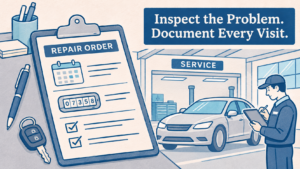
Ask the service department to include each concern on the repair order. Review the description and request a correction if something is missing or inaccurate. Describe what actually happened without guessing about the cause or exaggerating the severity.
Keep a Repair Order and Final Invoice for Each Visit
Ask the service department to record every concern accurately.
Review the paperwork for:
- Your reported symptoms.
- Mileage at intake and return.
- Drop-off, completion, and pickup dates.
- Diagnostic findings and fault codes, when documented.
- Repairs, replacements, and software updates.
- Findings such as “could not duplicate.”
- Explanations for delays or denied coverage.
California’s Bureau of Automotive Repair requires invoices documenting warranty repairs even when the customer is not charged.
If the paperwork omits a complaint, request a correction or written supplement. Keep emails, texts, appointment confirmations, and manufacturer case numbers.
Maintain your own timeline as well. Distinguish between the date you requested an appointment, the date the car entered the shop, and the date it was ready for pickup.
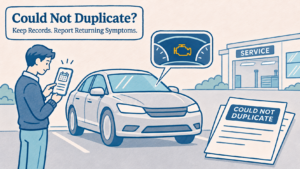
What If the Dealership Says “Could Not Duplicate”?
An intermittent problem may not occur during the inspection. That does not automatically make the visit irrelevant or mean the problem does not exist.
California’s civil jury instructions recognize that presenting a vehicle to the manufacturer or its authorized facility for repair can constitute a repair opportunity even when no repair work is performed. The circumstances surrounding each visit still matter.
Make sure the records accurately describe both your complaint and the inspection outcome. If the paperwork says “could not duplicate,” make sure it also identifies the symptoms you reported and the conditions under which they occur. Keep a copy, even if no repairs were made.
If the symptoms return, notify the authorized service department and explain that the problem continued after the previous visit. Note when it happened, the approximate mileage, and any warning messages. Provide safely obtained photos or videos if helpful. Never record while driving or recreate a dangerous malfunction to collect evidence.
Frequently Asked Questions About New-Car Warranty Repairs
1. Should I take my new car to the dealership or an outside body shop?
For a suspected factory defect or warranty problem, bring it to an authorized dealership service department or manufacturer-authorized service center first.
We recommend allowing that facility to inspect the vehicle before an outside shop attempts repairs. This establishes manufacturer involvement and helps document the condition before outside work occurs.
2. Must the repair facility be authorized by the manufacturer?
For manufacturer-paid warranty work, follow the manufacturer’s authorized repair process. The facility may be a dealership, manufacturer-operated service center, or another authorized provider.
The key is authorization for the specific work. Do not assume that an unaffiliated shop can perform repairs at the manufacturer’s expense.
3. Do I have to return to the dealership where I bought the car?
Generally, the important question is whether the receiving facility is authorized to perform your manufacturer’s warranty work.
Another dealership for the same brand may be able to help. Confirm that it can handle your particular vehicle and concern before scheduling service.
4. Can outside repair attempts make a lemon law claim more difficult?
They can complicate the claim when the outside work involves the same components or systems as the alleged defect.
The manufacturer may argue that the work caused or worsened the condition. That does not automatically defeat the claim, but it can create an additional factual dispute requiring investigation.
5. What if an independent shop already tried to fix the problem?
Keep all estimates, invoices, diagnostic findings, and communications. Document which symptoms existed before the work and whether they changed afterward.
If the problem continues, contact an authorized service department and explain the prior work accurately. Provide the complete history to your attorney rather than withholding records you think may be unfavorable.
6. Do outside mechanic visits count as manufacturer repair attempts?
Not automatically. A visit to an unaffiliated shop does not necessarily give the manufacturer an opportunity to repair the vehicle.
Manufacturer authorization and involvement matter. Keep the records anyway because they may help establish the symptoms, timing, and condition of the vehicle.
7. What if the dealership refers the vehicle to another facility?
Ask the dealership to document the referral, the scope of authorized work, warranty coverage, and payment responsibility.
Keep records from both locations. A documented referral through the authorized repair process differs from independently arranging outside repairs without manufacturer involvement.
8. Can the manufacturer deny coverage simply because a body shop worked on the car?
Not solely for that reason. If coverage is denied because outside work allegedly caused damage, ask for the specific explanation and supporting basis.
The FTC states that an unsupported assertion that unauthorized service caused damage is insufficient; the manufacturer must demonstrate the causal connection.
9. Will independent oil changes void my warranty?
Not automatically. Follow the maintenance schedule, use the required specifications, and retain receipts showing the date, mileage, and services performed.
Damage caused by improper maintenance can present a separate issue. That is different from denying coverage merely because maintenance occurred outside the dealership.
10. Does more than 30 days at a repair shop make my car a lemon?
No. Time spent at any repair shop does not automatically establish eligibility.
California’s statutory presumption includes more than 30 cumulative days out of service for warranty nonconformities within its applicable early ownership period, subject to conditions and exceptions. A lengthy repair stay deserves review, but does not guarantee a buyback.
11. How many dealership visits do I need for a lemon law claim?
There is no single number that guarantees qualification in every case. The defect, its seriousness, repair opportunities, downtime, and other circumstances matter.
The statutory presumption provides guidelines, but a claim may exist without meeting that presumption. Do not arrange unnecessary visits simply to reach a number.
12. What if the dealership has no appointments available?
Save your request and the earliest appointment offered. Contact the manufacturer about another authorized facility or an appropriate alternative.
Do not assume that waiting at home for service counts the same as being out of service for warranty repairs. If driving may be unsafe, ask for towing and handling instructions.
13. What if the dealership refuses to inspect or repair my vehicle?
Request an explanation in writing. Clarify whether it is denying warranty coverage, declining a particular repair, or unable to offer an immediate appointment.
Contact the manufacturer, obtain a case number, and retain the communications. Have an attorney review the refusal and repair history if the problem remains unresolved.
14. Does a dealership visit satisfy every manufacturer-notice requirement?
Not necessarily. Requesting service and giving formal notice of a lemon law claim can serve different purposes.
Applicable procedures may depend on the manufacturer and legal framework. California’s AB 1755/SB 26 process applies to manufacturers that elect into it. Have an attorney check the relevant notice requirements and deadlines.
15. What documents should I send a lemon law attorney?
Provide your purchase or lease agreement, registration, warranty information, repair records, and manufacturer communications.
Include outside-shop records and a short timeline explaining when symptoms began, what work occurred, and whether the problems continue. If documents are missing, identify them so the office can explain what else is needed.
New Car Still Having Problems? Start With the Authorized Dealership
If your new vehicle develops a suspected factory defect or warranty problem, bring it to the manufacturer’s authorized dealership service department or service center before arranging outside repair attempts.
Give the manufacturer an opportunity to inspect and address the concern. Keep accurate records of your complaints, service visits, and any recurring symptoms.
If the problems continue, Cha Cha Cha Law can review your repair history—including any outside work—and discuss whether a California lemon law claim may be available.
Call 213-351-3513 or submit a website inquiry for a free consultation. Assistance is available in English, Korean, and Spanish.
This article provides general information, not legal advice. Eligibility and available remedies depend on the vehicle, warranty, repair history, and applicable law.