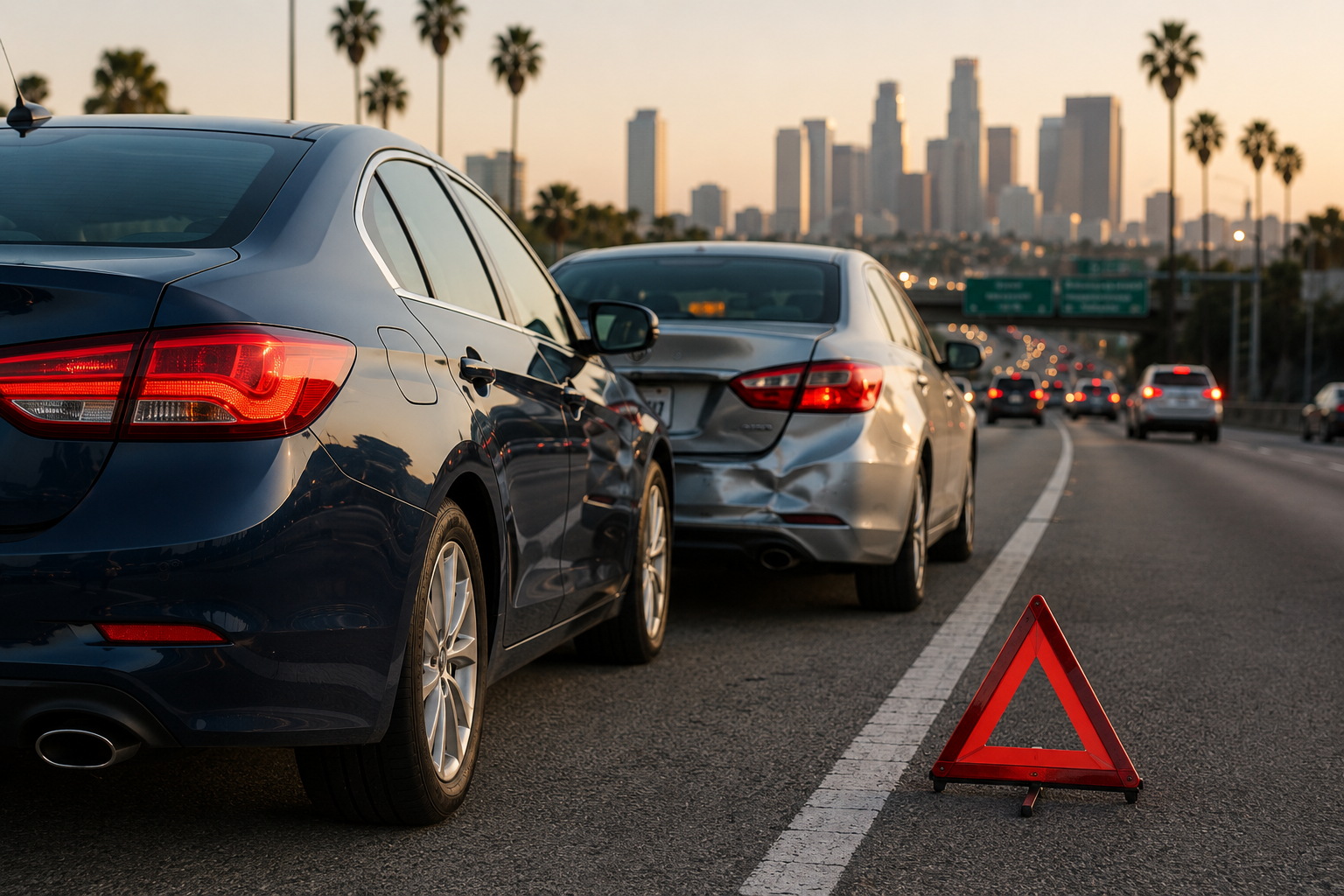
Getting rear-ended can leave you shaken and unsure of what to do next. One moment you may be stopped at a red light, slowing down in traffic, or sitting in stop-and-go congestion on a Los Angeles freeway. The next, another vehicle has hit you from behind.
In those first few moments, you may be thinking about the damage to your vehicle, what the other driver is doing, or what you are supposed to do next.
Before anything else, focus on safety.
If you’re wondering what to do after a rear-end accident, start by checking yourself and your passengers for injuries, turning on your hazard lights, and determining whether you are in danger from surrounding traffic. If anyone is hurt, call 911. If no one is injured and your vehicle can be moved, California DMV guidance instructs drivers to move their vehicles out of traffic.
Taking a moment to assess the situation can help protect you, your passengers, and others around the accident scene.
What Should You Do First After a Rear-End Accident?
Immediately after being rear-ended, check yourself and your passengers before worrying about the vehicles.
Ask everyone in the vehicle whether they are okay and look for injuries that may require emergency assistance. If anyone is hurt, call 911.
Next, look at where your vehicle has stopped.
Are you blocking an active traffic lane? Are you in an intersection? Are vehicles passing close to you? If the accident happened on a Los Angeles freeway, are you stopped somewhere that leaves you exposed to approaching traffic?
The initial collision may be over, but the accident scene itself can still present safety risks.
Before worrying about your bumper or anything else, make sure you and your passengers are safe.
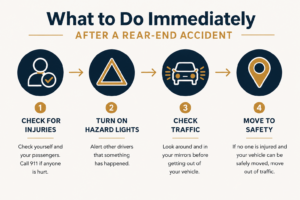
Check Yourself and Your Passengers Before Checking the Cars
After another vehicle hits you from behind, it is natural to immediately wonder how badly your car was damaged.
Your vehicle can wait.
First, check the people inside. Make sure everyone is responsive and determine whether anyone needs emergency assistance.
Rear-end collisions can result in injuries, and the outcome of a crash can depend on numerous factors involving the collision, vehicle, and occupants. The National Highway Traffic Safety Administration (NHTSA), for example, evaluates crash circumstances, vehicle damage, occupant factors, applied forces, and other evidence when studying how motor vehicle crash injuries occur.
For that reason, the appearance of your bumper alone should not be used to determine whether everyone inside the vehicle is okay.
At this point, you do not need to determine the full extent of any potential injury. Your immediate concern is whether anyone needs emergency help.
Turn On Your Hazard Lights
Turn on your hazard lights as soon as you safely can.
Hazard lights can alert approaching motorists that your vehicle is stopped or that something unusual has happened ahead. California DMV guidance specifically tells drivers approaching emergency flashers to slow down because there may be a collision or another road emergency.
This can be especially important when a rear-end accident leaves vehicles stopped in or near moving traffic.
Los Angeles drivers regularly encounter sudden traffic slowdowns, busy intersections, and congested freeways. Making your vehicle visible to surrounding motorists is an important safety precaution while you determine what to do next.
Look Around Before Getting Out of Your Vehicle
One of your first instincts after being rear-ended may be to open the door and inspect the damage.
Before getting out, look around.
Check the traffic surrounding your vehicle and make sure you can safely exit. If you are stopped next to active traffic, stepping into the roadway without checking your surroundings could expose you to additional danger.
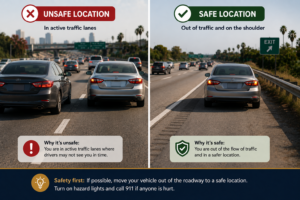
This is especially important on Los Angeles freeways and other heavily traveled roads.
There will be time to inspect your vehicle once you are in a safer position. Do not put yourself in unnecessary danger simply to look at the damage immediately.
Should You Move Your Car After a Rear-End Accident?
Whether a vehicle should be moved after a collision depends in part on whether anyone has been injured.
According to the California DMV, if no one is hurt, drivers should move their vehicles out of traffic. The California Highway Patrol similarly advises that after a property-damage-only collision, the vehicle should be moved out of the roadway to a point of safety, which may include the shoulder or, on a freeway, the next off-ramp.
If the collision involves an injury, California law imposes additional obligations on the drivers involved. However, CHP explains that a vehicle may still be moved to the shoulder or otherwise out of the roadway for safety while the driver remains at the scene and fulfills those obligations.
Of course, do not attempt to drive a vehicle that cannot be operated safely.
If your vehicle is disabled or you are unsure whether it can be safely moved, prioritize your immediate safety and seek appropriate assistance.
Why Is Getting Out of Active Traffic Important?
A collision can create additional danger when stopped or damaged vehicles remain in the path of approaching traffic.
California DMV guidance advises drivers to avoid blocking the roadway around a collision and, when no one is injured, to move involved vehicles out of traffic.
This is particularly important in Los Angeles, where a collision may occur on a busy multilane street or heavily traveled freeway.
When you are deciding what to do, continue paying attention to surrounding traffic. Avoid unnecessarily entering active lanes or putting yourself in another dangerous position.
The goal is simple: prevent the original collision from creating another emergency.
What Should You Do After a Rear-End Accident on a Los Angeles Freeway?
A rear-end accident on a Los Angeles freeway requires particular attention to your surroundings.
Whether the crash occurs on the 5, 10, 101, 110, 405, or another Southern California freeway, start by checking whether anyone is hurt and turning on your hazard lights.
If the collision involves property damage only, CHP advises moving the vehicle out of the roadway to a point of safety. On a freeway, CHP specifically identifies the shoulder or the next off-ramp as possible locations.
If someone has been injured, call 911. CHP states that a vehicle involved in an injury collision may be moved to the shoulder or out of the roadway for safety, but the driver must remain at the scene and fulfill the applicable legal obligations.
Use caution before getting out of your vehicle, particularly when traffic continues to move nearby.
What If Your Car Cannot Be Safely Moved?
Not every vehicle can be driven after a rear-end collision.
If your vehicle has been damaged to the point that it cannot be safely operated, do not create another hazard by attempting to drive it.
Turn on your hazard lights and remain aware of the traffic around you. If emergency assistance is needed, request it and follow the instructions provided by emergency personnel.
Exactly what is safest may depend on where the vehicle has stopped and the conditions surrounding the accident.
Don’t Let Vehicle Damage Distract You From Immediate Safety
After a rear-end collision, it can be easy to become focused on your vehicle.
You may see substantial damage and immediately start thinking about repairs. Or you may see relatively little damage and assume that the collision was insignificant.
Neither should be your first concern.
NHTSA’s crash-injury research considers numerous factors when evaluating how injuries occur, including crash circumstances, vehicle factors, occupant factors, applied forces, and injury mechanisms. In other words, a photograph of bumper damage alone does not provide the complete picture of what happened to an occupant during a collision.
Focus first on whether anyone needs immediate assistance and whether you are in a safe location.
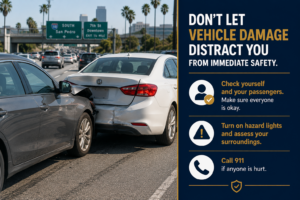
The other consequences of the accident can be addressed once the immediate safety concerns have been handled.
Quick Safety Checklist: What to Do After a Rear-End Accident
If you have just been rear-ended, remember these immediate safety priorities:
- Stop and assess what happened.
- Check yourself and your passengers for injuries.
- Call 911 if anyone is hurt.
- Turn on your hazard lights.
- Check surrounding traffic before getting out of your vehicle.
- If no one is injured, move your vehicle out of traffic when it can be safely operated.
- If someone is injured, prioritize emergency assistance and follow applicable requirements at the scene.
- Do not attempt to drive a vehicle that cannot be safely operated.
- Continue watching for surrounding traffic and other hazards.
Once the immediate safety concerns have been addressed, you can begin working through the other important steps that follow a rear-end accident.
Why Your First Actions After a Rear-End Accident Matter
If you are trying to figure out what to do after a rear-end accident in Los Angeles, you do not need to handle everything at once.
Start with safety.
Check yourself and your passengers. Call 911 if anyone is hurt. Turn on your hazard lights and assess whether your vehicle is creating a traffic hazard. If no one is injured and your vehicle can be safely operated, move it out of traffic.
Once you and your passengers are safe, you can begin addressing the other steps that may be important after a collision.
Our 7 Steps to Take After a Rear-End Accident in Los Angeles guide explains what to consider throughout the aftermath of a crash.
Frequently Asked Questions About What to Do After a Rear-End Accident
What should I do immediately after a rear-end accident?
Immediately after a rear-end accident, your first priority should be the safety of yourself and your passengers. Check everyone in the vehicle for injuries and call 911 if anyone is hurt or needs emergency medical assistance. Turn on your hazard lights to alert approaching drivers, and take a moment to assess the traffic and other hazards around your vehicle before opening your door or stepping outside.
If no one is injured, California DMV guidance instructs drivers to move their vehicles out of traffic. If your vehicle can be safely operated, move it to a nearby safe location away from active traffic. Before getting out, check your mirrors and surroundings for approaching vehicles, motorcycles, bicycles, or other traffic. This is especially important after a rear-end accident on a busy Los Angeles street or freeway, where remaining in or near moving traffic may create an additional safety risk.
Should I move my car after a rear-end accident in California?
If no one is injured after a rear-end accident in California, California DMV guidance instructs drivers to move their vehicles out of traffic. The California Highway Patrol (CHP) similarly advises that vehicles involved in property-damage-only collisions should be moved out of the roadway to a safe location. Depending on where the accident occurs, this may mean moving to the shoulder or, on a freeway, to the next off-ramp when it is safe to do so.
If someone is injured, the situation is different because California law imposes additional duties on drivers involved in an injury collision. However, CHP explains that a vehicle may still be moved to the shoulder or otherwise out of the roadway when necessary for safety, as long as the driver remains at the scene and fulfills the applicable legal requirements. Do not attempt to move or drive a vehicle that cannot be safely operated. Your immediate priority should be protecting yourself, your passengers, and others from additional danger while remaining at the scene as required.
What should I do if I’m rear-ended on a Los Angeles freeway?
If you are rear-ended on a Los Angeles freeway, first check yourself and your passengers for injuries, turn on your hazard lights, and assess the traffic around you. If anyone is injured or needs emergency medical assistance, call 911. Be especially cautious before getting out of your vehicle because surrounding traffic may still be moving at high speeds.
For a property-damage-only collision, the California Highway Patrol (CHP) advises moving your vehicle out of the roadway to a point of safety. On a freeway, this may include moving to the shoulder or taking the next off-ramp when it is safe to do so. Avoid unnecessarily standing or walking in active traffic lanes, and do not attempt to drive a vehicle that cannot be safely operated. Even after the initial rear-end collision is over, staying alert to surrounding traffic can help reduce the risk of an additional crash.
Should I get out of my vehicle immediately after being rear-ended?
Not necessarily. After being rear-ended, check your surroundings before opening your door or stepping out of the vehicle. Look for approaching cars, motorcycles, bicycles, and other traffic, especially if the collision occurred on a busy Los Angeles street or freeway. Getting out immediately when vehicles are still moving close to you could put you at risk of an additional collision.
If you can safely exit, move to a location away from active traffic and remain aware of your surroundings. If it is not safe to get out, avoid unnecessarily entering the roadway simply to inspect the damage to your vehicle. Your immediate safety should come first, and you can assess the vehicle once you are in a safer position.
What if my vehicle cannot be safely moved after an accident?
If your vehicle cannot be safely moved after a rear-end accident, do not attempt to drive it simply to get it out of the roadway. Turn on your hazard lights to help alert approaching drivers and remain aware of surrounding traffic. If anyone is injured or there is an immediate safety emergency, call 911. Otherwise, seek appropriate roadside assistance for a vehicle that cannot be safely operated.
Whether it is safer to remain inside the vehicle or exit will depend on where your vehicle has stopped and the traffic conditions around you. Before getting out, check carefully for approaching vehicles and avoid unnecessarily entering active traffic lanes. If you are unsure what to do in a dangerous location, request emergency assistance and follow the instructions of emergency responders. Your priority should be avoiding additional danger while waiting for help.
Does minor vehicle damage mean no one could be injured?
No. Minor visible vehicle damage does not necessarily mean that everyone involved in a rear-end accident is uninjured. The amount of damage you can see on a bumper or other part of the vehicle is only one factor and, by itself, does not provide a complete picture of what happened to the occupants during the collision.
The National Highway Traffic Safety Administration (NHTSA) considers multiple factors when studying how crash injuries occur, including the circumstances of the crash, vehicle characteristics and damage, occupant factors, and the forces involved. Because every rear-end collision is different, you should not assume that no one could have been injured simply because the vehicles appear to have relatively minor damage. Your immediate priority should be checking yourself and your passengers and addressing any injuries that may require emergency assistance.
Injured in a Rear-End Accident in Los Angeles?
Making safety your first priority is an important first step after a rear-end collision. Once the immediate danger has passed, however, you may have questions about what to do next and how the accident could affect you.
If you were injured in a rear-end accident in Los Angeles, the circumstances of the collision may affect your legal options and any potential personal injury claim.
At Cha Cha Cha Law, our Los Angeles personal injury attorneys help people injured in car accidents understand their rights and navigate the personal injury claims process.
Every accident is different. Our team can review the circumstances of your collision, answer your questions, and help you better understand your legal options.
If you or a loved one was injured after being rear-ended in Los Angeles, contact Cha Cha Cha Law at (213) 351-3513 or submit a website inquiry to discuss your situation.