


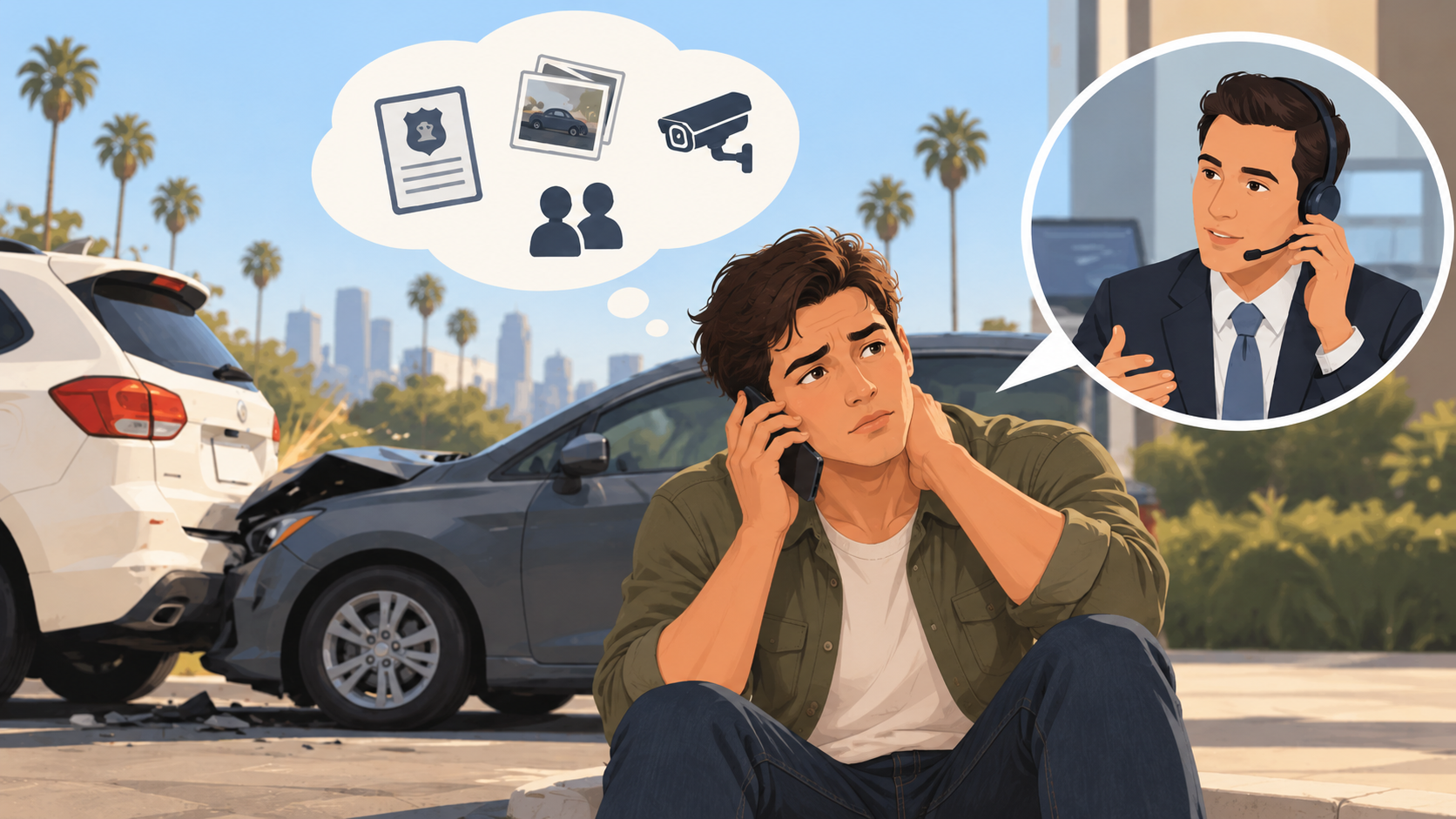
Talking to insurance after a car accident may happen sooner than you expect. In some cases, an insurance adjuster may contact you within days of the collision and begin asking questions about what happened, whether you were injured, and how you are feeling.
The call may seem routine, but if you were injured in the accident, you may want to be thoughtful about how much information you provide before you fully understand your situation.
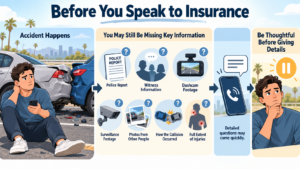
In the hours or days immediately following a collision, you may not yet know the full extent of your injuries. You may also be missing important information about the accident, such as a police report, witness statements, photographs, video footage, or other evidence.
That is why it may be important to speak with a California personal injury attorney before providing a detailed or recorded statement to the other driver’s insurance company.
A lawyer can help you understand what information is being requested, what your rights are, and how to communicate with the insurance companies without guessing or making statements before you have all of the information.

Should You Speak With a Lawyer Before Talking to Insurance After a Car Accident?
If you were injured in a car accident, it can be helpful to speak with a personal injury lawyer before discussing your injuries in detail or giving a recorded statement to the other driver’s insurance company.
This does not mean you should ignore your own insurance company.
You should notify your own insurer of the accident as required by your policy and cooperate with reasonable requests related to its investigation. Your own insurance company may also request information or a recorded statement depending on your policy and the circumstances of the claim.
The important distinction is that your relationship with your own insurer is different from your relationship with the other driver’s insurance company.
When another driver’s insurer begins asking detailed questions about your injuries or requests a recorded statement, speaking with an attorney first may help you understand what you are being asked and how the conversation could relate to your personal injury claim.
Why Do Insurance Companies Contact You So Quickly After an Accident?
Once an accident is reported, the insurance companies involved will generally begin investigating the claim.
An adjuster may contact you to ask questions such as:
- Where and when did the accident happen?
- How did the collision occur?
- Which direction were the vehicles traveling?
- Did the police respond?
- Were there any witnesses?
- Were photographs or videos taken?
- Were you injured?
- What injuries are you reporting?
- How are you feeling now?
- Are you willing to provide a recorded statement?
From the insurance company’s perspective, these questions can be part of investigating liability, damages, and coverage.
The challenge for an injured person is that these questions may come very early.
You may be answering questions about an accident that happened only a day or two earlier, before you have had an opportunity to fully understand what occurred or how the accident has affected you.
Talking to Your Own Insurance After a Car Accident Is Different
When discussing talking to insurance after a car accident, it is important not to treat every insurance company the same.
Your own auto insurance company has a contractual relationship with you through your insurance policy.
You should generally report the accident to your insurer as required by your policy. Your insurance company may then ask for additional information while investigating the claim.
Depending on your policy and the circumstances, your insurer may request a written or recorded statement.
Your policy may also contain provisions requiring you to cooperate with the investigation.
For that reason, the general advice is not to simply refuse to communicate with your own insurance company.
If you were injured and have questions about what your insurer is requesting, however, you can speak with a personal injury lawyer before responding to a request you do not understand.
What About the Other Driver’s Insurance Company?
The situation is different when the other driver’s insurance company contacts you.
You do not generally have the same contractual relationship with the other driver’s insurer that you have with your own insurance company.
The adjuster may contact you because the company is investigating a claim against its insured.
That may involve asking for your version of the collision, information about your injuries, and sometimes a recorded statement.
If you were injured, you do not need to feel pressured to immediately have a detailed conversation simply because an adjuster calls.
You can first speak with a personal injury attorney to better understand the claims process and determine how to respond.
Why Speaking With a Lawyer First May Be Important
One of the biggest reasons to consider speaking with an attorney before discussing your injuries in detail is timing.
Immediately after an accident, there may still be a lot that you do not know.
For example, you may not yet have:
- The police report
- Witness information
- Dashcam footage
- Surveillance footage
- Photographs from other people involved
- A clear understanding of how the collision occurred
- A complete understanding of how the accident has affected you
That can make it difficult to confidently answer detailed questions.
A personal injury attorney can review what is known about the accident, explain the insurance process, and help you understand what information may need to be provided.
If you decide to hire an attorney, your lawyer can also communicate with the insurance companies on your behalf when appropriate.
Be Careful When Discussing Your Injuries Too Early
Questions about injuries may sound straightforward.
An adjuster might ask:
“How are you feeling?”
“Are you okay?”
“How badly were you hurt?”
“What injuries did you suffer?”
The problem is that these questions may be asked before you know the complete answer.
Imagine that an adjuster calls the day after an accident and asks whether you are okay.
Someone might instinctively respond:
“Yeah, I think I’m fine.”
They may simply mean that they are still processing what happened or do not yet know the extent of the situation.
But that statement can sound very different from:
“I don’t know the full extent of my injuries yet.”
The goal is not to avoid telling an insurance company about an injury.
It is also not to exaggerate anything.
The goal is to provide truthful and accurate information without making assumptions about things you do not yet know.
You Do Not Need to Guess About Your Injuries
If you do not know the full extent of your injuries, you do not have to guess.
You should not make a definitive statement simply because an adjuster wants an immediate answer.
For example, avoid automatically characterizing an injury as:
- Minor
- Temporary
- Completely resolved
- Not serious
- Permanent
unless you actually have a basis for making that statement.
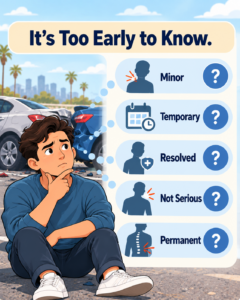
You can truthfully explain that you are not yet prepared to discuss the full extent of your injuries.
That is different from hiding or misrepresenting an injury.
What Is a Recorded Statement After a Car Accident?
While talking to insurance after a car accident, an adjuster may ask whether you are willing to provide a recorded statement.
A recorded statement is generally an interview in which the insurance adjuster asks questions and records your responses.
The questions may cover topics such as:
- How the accident happened
- What you saw immediately before the collision
- What each vehicle was doing
- Your speed or the speed of another vehicle
- Traffic signals or signs
- Weather or roadway conditions
- What happened after the impact
- Whether you were injured
- What injuries you are reporting
- Prior accidents or injuries
Because the interview is recorded, there is a record of the questions and your responses.
That is one reason why you should understand who is requesting the statement and why before agreeing to it.
Do You Have to Give a Recorded Statement?
It depends on which insurance company is requesting it.
Your Own Insurance Company
Your own insurance company may request a written or recorded statement during its investigation.
Your insurance policy may require you to cooperate with certain requests from your insurer.
If you are unsure about your obligations or concerned about a requested statement, a personal injury attorney can review the situation with you.
The Other Driver’s Insurance Company
The other driver’s insurer is different.
You generally do not have the same contractual obligation to cooperate with the other driver’s insurance company that you may have with your own carrier.
If you were injured and the other driver’s adjuster asks you for a recorded statement, consider speaking with a California personal injury attorney before agreeing to the interview.
Why Accuracy Matters When Talking to an Insurance Adjuster
Insurance companies may consider many different sources of information when evaluating an accident claim.
Depending on the case, that information may include:
- Statements from the drivers
- Witness statements
- Police reports
- Photographs and videos
- Vehicle damage
- Medical documentation
- Employment or wage-loss documentation
- Other evidence relating to the collision
An adjuster may compare something you said shortly after the accident with information that becomes available later.
That does not mean every difference automatically creates a problem.
People may remember additional details after an accident, misunderstand a question, or simply not have all of the information during an early phone call.
Still, avoiding guesses and providing accurate information from the beginning can help prevent unnecessary confusion.
What If the Insurance Adjuster Asks About Previous Injuries?
An insurance adjuster may ask whether you had previous injuries, accidents, or medical conditions.
Prior injuries can sometimes become relevant in a personal injury claim, particularly when they involve the same area of the body.
You should never intentionally conceal relevant information or provide a false answer.
At the same time, you should understand what information the insurance company is requesting before signing documents or broad authorizations that you do not understand.
If you have questions about a request for medical information or another document, speaking with a personal injury lawyer can help you understand what is being requested and how it may relate to your claim.
Can an Insurance Company Consider What You Said Earlier?
Yes. Statements provided during the claims process can become part of the information an insurance company considers when investigating and evaluating the claim.
For example, an insurer may compare an early description of the accident with:
- A police report
- Witness testimony
- Photographs
- Video footage
- Later statements
- Other available evidence
This is another reason why it is better to say “I don’t know” when that is the truthful answer rather than guessing.
You do not have to have every answer immediately after a collision.
What If You Already Talked to the Insurance Company?
Many people speak with an insurance adjuster before ever thinking about calling a lawyer.
If you already spoke with the insurance company, that does not automatically mean that you harmed your personal injury claim.
If you later consult with an attorney, let the attorney know:
- Which insurance company contacted you
- When the conversation occurred
- Whether it was recorded
- What you remember discussing
- Whether you discussed your injuries
- Whether you provided documents
- Whether you signed anything
- Whether the adjuster made a settlement offer
Your attorney can review the circumstances and determine whether anything from the conversation needs to be addressed as the claim moves forward.
Be Careful Before Signing a Settlement or Release
An insurance conversation may eventually lead to discussions about settling the bodily injury claim.
Before accepting a settlement or signing a release, make sure you understand exactly what you are agreeing to.
A settlement release can affect your ability to pursue additional compensation relating to the accident after the claim has been resolved.
If you have questions about a settlement offer or release, a personal injury attorney can review the document and explain what it means before you make a decision.
How Can a Car Accident Lawyer Help With Insurance Communications?
Speaking with a lawyer early does not automatically mean that a lawsuit will be filed.
A personal injury attorney can help you understand the claims process before important decisions need to be made.
Depending on the circumstances, a lawyer may help by:
- Reviewing how the accident happened
- Identifying the insurance companies involved
- Explaining what your own policy may require
- Discussing a request for a recorded statement
- Helping preserve important evidence
- Reviewing insurance correspondence
- Reviewing settlement documents or releases
- Communicating with insurance companies on your behalf when appropriate
This can be particularly important when you are injured and the other driver’s insurance company wants to discuss those injuries in detail shortly after the collision.
When Should You Consider Speaking With an Attorney Before the Insurance Company?
Every accident is different, but speaking with an attorney early may be particularly helpful when:
- You suffered injuries in the collision
- The other driver disputes responsibility
- The insurance company disputes fault
- The other driver’s insurer wants a recorded statement
- An adjuster is asking detailed questions about your injuries
- Multiple vehicles were involved
- A commercial vehicle was involved
- A rideshare or delivery vehicle was involved
- You received a settlement offer
- You are being asked to sign a release
- You do not understand what information the insurer is requesting
You do not need to wait until there is a dispute with the insurance company before asking an attorney questions.
Getting legal guidance early can help you understand the process before making decisions about your claim.
Frequently Asked Questions About Talking to Insurance After a Car Accident
Should I talk to a lawyer before the insurance company after a car accident?
If you were injured, it may be helpful to speak with a personal injury attorney before giving a detailed or recorded statement to the other driver’s insurance company. An attorney can explain what information is being requested and how the insurance claims process works.
Do I still need to contact my own insurance company?
Generally, yes. You should notify your own insurance company of the accident as required by your policy and cooperate with reasonable requests related to its investigation. Your obligations to your own carrier are different from your relationship with another driver’s insurer.
Do I have to talk to the other driver’s insurance company?
The other driver’s insurer may contact you as part of its investigation, but you generally do not have the same contractual duty to cooperate with that insurer that you may have with your own insurance carrier. If you were injured or the insurer requests a recorded statement, consider speaking with a lawyer before providing detailed information.
Should I give the other driver’s insurance company a recorded statement?
If you were injured, consider speaking with a personal injury attorney before giving the other driver’s insurer a recorded statement. Your obligations may be different when the request comes from your own insurance company.
Can I tell an insurance adjuster that I do not know?
Yes. If “I don’t know” or “I don’t remember” is the truthful answer, you do not need to guess simply to provide an answer.
What if I already gave a recorded statement?
Giving a statement does not automatically prevent you from pursuing a personal injury claim. If you later speak with an attorney, tell the attorney that you gave a statement and provide as much information as you can about what was discussed.
Speak With a Los Angeles Car Accident Lawyer Before Discussing Your Injuries in Detail
Talking to insurance after a car accident is often part of the claims process, but an insurance adjuster may contact you before you have all of the information about the collision or fully understand how the accident has affected you.
If you were injured, it may be important to speak with a personal injury attorney before providing a detailed or recorded statement to the other driver’s insurance company.
At Cha Cha Cha Law, we represent people injured in car accidents throughout Los Angeles and Southern California. Our personal injury team can help you understand your rights, explain the insurance claims process, review what an insurance company is requesting, and communicate with insurers on your behalf when appropriate.
If an insurance company has contacted you after a collision and you are unsure what to say, you do not have to navigate the process alone.
Speak with a Los Angeles car accident lawyer to discuss your situation and learn more about your legal options.
Contact us at (213) 351-3513 or submit a website inquiry for a free consultation.
This article is for general informational purposes only and does not constitute legal advice. Every case is different, and no particular outcome can be guaranteed.